banner ads
Showing posts with label Mystery. Show all posts

Friday, July 27, 2012

Most Mysterious Animals in the World


Ahool

Ahool is a giant bat.
Wing span measuring more than 7 feet. These animals are never seen around Java.

Agogwe


Agogwe like human beings and the size is very small, like a dwarf.
Often found in East Africa.

Arabhar


Arabhar giant flying snake is believed to be around the Arabian sea.


Tsuchinoko


Snake species are very rare and strange, like a paunchy bottle or bowling pin with a small tail like a rat tail.
Ever seen in Hokkaido, Japan.

Yeti


Similar to Bigfoot, appear in the Himalayan region.


Buru


15-foot long lizard and dark.
Found in the Himalayas and is believed to have punah.kira about its form is almost like the picture above.

Jersey Devil


Horse-shaped animals that have wings like bats and has a hand.
Standing on two feet, is found in New Jersey, United States.

Mokele-Mbembe


Believed to be the dinosaurs that were alive in Congo, Africa.


Mothman


A creature half human and half bat, do not have a neck, with wings and red eyes.
First seen in 1966 and identified as UFH (Unidentified Flying Humanoid).

Ogopogo


Sea monster similar to Nessie in Loch Ness lake.
The difference is found in lakes Ogopogo Okanagan, Canada.

Mysterious Curse World's Most Famous


The history of our world is so full of mysterious things that might not be acceptable to reason and common sense, but that's what happened, as this mysterious thing called a curse, since time immemorial to our day, many of these curses are ridiculous , but it does happen, you may be surprised after reading this strange curse curse, were among the following list is the bane superman. let's move on to the Most Famous Mysterious Curse

Curse of Superman

Superman curse refers to the misfortune and bad luck to those people involved with the Superman story in recent years.
perhaps the most famous is the curse of the actor George Reeves, who is the beginning of Superman in the television series and Christopher Reeve who played Superman in the movie movie character first, George Reeves committed suicide, and Christopher Reeve became paralyzed after falling from his horse. Other victims were Jerry Siegel and Joe Shuster created the character of Superman, but they just got a little money, because the company which is a DC Comic their employees hold all copyrights to the work of superman, some people have said that jerry and joe put a curse to the character of Superman because they feel the results of their efforts are not appreciated. there is a speculation that John F. Kennedy is also a victim of this curse, before his death, JFK approved a staff of scenarios in which the hero superman story praising the president's physical health, this scenario is scheduled for release in April 1964.
Because of the curse of this kind is a lot of actors who refuse to portray Superman, Superman Starring example is named Paul Walker, he was selected as one of the 10 worst actor.


Curse of James Dean's Porsche

On 30 September 1955, exactly at 5:45 o'clock in the name of a movie icon James Dean died from an accident when the car Porsche Spyder (His nickname "Little Bastard" recently purchased crashed into another car, at the time of James Dean was with Rolf Wutherich which is friend and also a mechanic, at the time of the accident was thrown from the car and Rolf survivors of the deadly accident, but Dean is locked in the car, broke his neck. Donald Turnupseed, the driver of the car that was hit by the dean only suffered minor injuries, after the tragedy, a modifier called George Barris bought the car wreck that car worth $ 2,500. When the car arrived at Barris garage, the Porsche slipped and fell on one of the mechanics that are being issued this car, this accident resulted in the fracture mechanical legs.

Barris had a bad feeling since I first saw this car, and was proved when kecurigaanya Pornona race at Fair Grounds on October 24, 1956, two doctors named Troy McHenry and William Eschrid which car parts that they have taken from the "Little Bastard" , McHenry died when his car that uses mesim Porsche lost control and hit a tree, while the car was upside down but Eschrid Eschrid survived though badly wounded, then he said that he used the car suddenly locked up while he was cornering,

Automobile-related accidents this continues until 1960


Kennedy Curse

Kennedy Curse refers to a series of unfortunate events experienced by the Kennedy family, some parties considered that the streak of bad luck happens to the kennedy family as a curse, some of the Kennedy family died young, for example, Brother of John F Kennedy and Robert F Kennedy was assassinated on when he was in office then there's John F Kennedy Jr.
who died in a plane crash in 1999, several other family members take this as evidence of the curse, then there is also Joseph Kennedy who was murdered during World War II, and Edward Kennedy Jr., whose leg was amputated at the age of 12 years and the Last there is also a Michael Kennedy who was killed in a skiing accident.

Curse of 27

Club 27 is also known as the club's 27 timeless, this is the name of pop culture to a bunch of rock and blues musicians who all died at the age of 27 years, sometimes due to a mysterious thing, there is some debate as to the criteria used to put people to this klib, driving force behind the formation of this group is the death of some of these musicians who happened to be at age 27.
Included in this group are Jimi Hendrix, Jim Morrison and Janis Joplin, Brian Jones also included, then Kurt Cobain is now often also considered appropriate to enter into this group because impactnya music in recent years

Curse of Tutankhamen
Perhaps this is the curse of the most phenomenal and mysterious in the world, the story a few months after the opening of Tutankhamen's tomb Lord Carnarvon tragedy struck -57 years old-(contributor of funds to search for Tutankhamen's tomb), he suffered a mysterious illness and taken to Cairo, and died a few days later, the exact cause of death is unknown, but it seems the cause is due to infection of the bite srangga, legend says that when he dies there are many events that are unacceptable to common sense. throughout cairo to be dark and no light, His son was also reported that his dog barking and langusng died suddenly. even stranger, when the mummy of Tutankhamen was opened in 1925, found the wound in the left cheek just like the exact same position on Carnavaron insect bites,
In the year 1929 eleven people connected with the search for the tomb, died suddenly and in a way that is not fair.
It also includes two relatives of Carnavaron. Personal Secretary Carter, Richard Bethell and his father, Lord Westburry, Westburry mengakhiti his own life by jumping from the top of the building, and he left a message that reads "I really can not stand anymore of this horror, and do not know what to do anymore, so I'm looking for way out "

Thursday, July 26, 2012

10 The World's Most Mysterious


10. Monsieur Chouchani
http://www.indonesiaindonesia.com/imagehosting/images/3617/1_monsieur_Chouchani.jpg
Monsieur Chouchani (died in 1968) is the nickname or nickname given to the figure of the Jewish teachers who teach some students in Europe after World War 2.
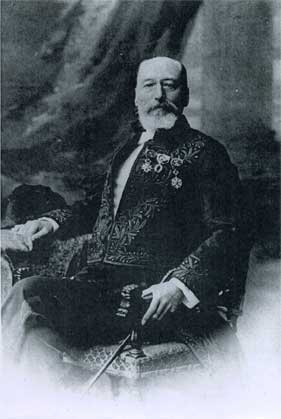
Most of his students later became the well-known figures, such as Emmanuel Levinas (philosopher of France, as seen in above photo), and Elie Wiesel (Jewish writer, Nobel Peace Prize in 1986). Very little is known about Chouchani, including who is also his real name remains a mystery.
No physical works (such as writing, publications, books, etc.) from Chouchani, but he left a legacy intelektua l extraordinary through his students.
Chouchani an eccentric figure, dressed like a bum, but has a vast knowledge of them in science, mathematics, philosophy, and especially the Talmud. In general, details about the life and writings Chouchani obtained through interviews with his students.

9.
The Poe Toaster
http://a627.ac-images.myspacecdn.com/images01/81/l_65b0adcc1f0606811e2e9e975594760a.jpg
The Poe Toaster (People toast with Poe) is the nickname given to a mysterious figure who paid tribute to the famous American writer, Edgar Allan Poe by visiting his grave, every year, on the day of Poe's birthday (January 19).
Respect for the tradition started in 1949, a century after the death of Edgar Allan Poe (1849).
Every morning on the 19th of January, a figure dressed in a dark untidy visit the tomb of Poe in Baltimore, Maryland.
The figure is then raised a glass of cognac to toast (toast). Before leaving the cemetery, he placed three red roses and cognac bottle filled with half living in the tomb of poe. Three roses are believed to be a symbol of respect for Poe, Virginia (Poe's wife) and Maria Clemm (Poe-in-law) who was buried in the same tomb. While the intent of the half-bottle of cognac itself is still not known. Tradition by Poe Toaster is still continuing until now, but believed that it was not done by the same person (probably inherited by descendants of the original Poe Toaster).

8.
Babushka Lady
Babushka Lady is a nickname given to the mysterious female figure that is seen when the murder of U.S. President John F.
Kennedy. The woman is seen wearing a brown coat and scarf on the head, as it is commonly used by older women in Russia. Scarf is exactly what a babushka initial nickname attached to him (babushka is the Russian language to a grandmother or older women). The woman is seen holding something in his face, which is believed to be a camera. He looked at some photos that capture the scene of the murder. Even after the crowd had ended, he still looks in there and take pictures with his camera. A few moments later, the FBI requested through a public announcement that Babushka Lady gave her camera shots (probably for the purposes of the investigation), but she never showed up again to the public.
In 1970, a woman named Beverly Oliver, admitted as a Babushka Lady.
However, because the story contains many irregularities and inconsistencies, he is believed to be a false figure who wants to ride fame. Until now no one knows who the Babushka Lady actual figure, what he did at the murder scene and the reason he refused to hand over the camera shots.

7.
Kaspar Hauser
http://www.gk12if1.ziemke-koeln.de/sozpaed/hauser.jpg
On May 26, 1828, a teenager seen on the street in Nuremberg, Germany.
He carried a letter addressed to the Regiment Captain German Kavalry to-6. Mysterious letter writer who was taken by Hauser stated that the child was given to him to be detained since he was a baby, on October 7, 1812, and since then the child is locked up in a man. Hauser claimed that since he could remember anything, he was locked up alone in a dark room measuring 2 × 1x1.5 meters with a bed of straw as a bed and wooden rocking horse-carved by hand as a toy. Hauser also claimed that the first to interact with the mysterious man who visited him shortly before he was released, which is always careful to keep his face is not visible by Hauser.
According to rumors, Hauser is the Prince of Baden was born on 29 September 1812 and died a month later.
Rumored that the Prince was exchanged with the baby dying, while the original prince was Hauser who appears 16 years later in Nuremberg. In 2002, University of Munster DNA analysis comparing DNA and Stephanie de Beauharnais Hauser is rumored as the mother of Hauser (Queen of Baden). The results showed that DNA sequences are not identical but the deviation is shown not so much so that it can be concluded that they did not have blood relations.

6.
Fulcanelli
http://www.sott.net/signs/images/Jules_Violle.jpg
Fulcanelli is the pseudonym of French chemists in the late 19th century whose identity remains unknown.
Much of the mystery that surrounds him, but one of the most popular rumor is a story that says how his favorite disciple (Eugene Canseliet) managed to change 100 grams of lead into gold by using a little powder given to him by Fulcanelli.
It is believed that during World War II German intelligence incentive to do a search to find Fulcanelli because of his knowledge in the field of nuclear weapons.
Fulcanelli never met an atomic expert from France and provides detailed information relating to nuclear technology and claimed that atomic weapons have been used by humans since many years ago.
According Canseliet (disciple of Fulcanelli), his last meeting with Fulcanelli was in 1953 in Spain.
At that meeting, Fulcanelli is supposed to grow old 80 years younger, and looks like a 50-year-old man (O_o). The meeting itself is quite short, then Fulcanelli again disappeared from the public for good.

5.
DB Cooper
http://symonsez.files.wordpress.com/2008/11/db_cooper.jpg
DB Cooper, aka Dan Cooper is a pseudonym used by a famous and mysterious hijackers who on 24 November 1971, after receiving a ransom of $ 200,000, jumped from the rear of the Boeing 727 that dibajaknya.
Action on piracy, Cooper carried a bag containing the bomb and threatened to blow it up, if he was not given the sum of $ 200,000 and two sets of parachutes.
Cooper not seen since then and is not known whether he survived the penerjunannya.
In 1980, an 8-year-old boy found the money as much as $ 5.800 dollars in denominations of $ 20 on the banks of the Columbia River in the United States. Serial code is the same money that was found with the money given to Cooper as ransom.
Cooper Escape from the back of the plane with a parachute, causing the airport, the airport began to use metal detectors to prevent the same thing happen again.

4.
Count of St. Germain
 http://noreah.typepad.com/photos/uncategorized/st_germain_1.jpg Count of St. Germain, who allegedly died on February 27, 1784 was a nobleman, adventurer, scientist and amateur violinist, composer, and a mysterious. He also showed some skills related to chemistry. Myth, legend and speculation about the St. Germain continues to grow at the end of the 19th century and the beginning of the 20th century and continues to this day. Among them there is the belief that St. Germain was an immortal (live forever), a chemist who has an "Elixir of Life" (Liquid Eternity), and had predicted the French Revolution.
Since his death, many occult organizations that make it as a respected role model, and some even worshiped him.
Not a few others to claim to the St. Germain or an incarnation of St. Germain.

3.
Man In The Iron Mask

No, we're not talking about Leonardo Di Caprio or movie Man In The Iron Mask is played by him.
The movie was inspired by a mysterious figure in France.
Man In The Iron Mask (died November 1973) is a prisoner incarcerated in a prison in France (including the legendary prison, the Bastille) in the reign of King Louis XIV.
The identity of this man may never be known because no one ever saw his face hidden in a brown leather mask. Now we know that since time immemorial, people like to exaggerate the story because the stories in circulation, we are told that the mask is made ​​of steel that became the beginning of a nickname given to him.
According to a letter given to the head of the Prison in Pignerol (Benigne Dauvergne de Saint-Mars) where the first man in prison, the man's name was Eustache Dauger.
The letter also instructed to set up a cell that is coated with a door (to prevent people from outside to hear a voice from inside the cell). It also said that when he was talking to someone else other than for matters related to personal needs (example: ".. I want be'ol warden ..!" = P), he would be killed instantly. Until now no one knows who the true identity of this man, but there are some rumors saying that he was the brother of Louis XIV, son of King Charles II, diplomats from Italy, and others.

2.
Gil Perez
Gil Perez is a Spanish soldier who suddenly appeared in Mexico on October 26, 1593. He wore a palace guard uniforms Del Gobernador in the Philippines. He claimed that he did not know how all of a sudden he was in Mexico (hmm ... maybe she was the first jumper in the world = P). He said, before abruptly being in Mexico, he was on duty at the Palace Del Gobernador and said that the Philippines at that time governor, Don Gomez Perez Dasmarinas was just killed.
Two months later, a ship arrived from the Philippines to Mexico, carrying several passengers.
The story of the passengers was confirmed that Gil Perez had indeed Philippine governor killed. Even one of his passengers. One of the passengers even stated that he recognized Perez and see it in the Philippines on October 23 (O_o). After that, Perez then returned to the Philippines and continues to live there until the end.

1.
Green Children of Woolpit
 http://img124.imageshack.us/img124/6756/139h.jpg Are two children who mysteriously appeared in the village of Woolpit in Suffolk, England in the 12th century. Both children are brothers, and have green skin (Hulk?). In addition to the green skin, both children had a normal appearance like most human beings. They speak a strange language that is not recognized and did not want to eat nothing but peas.
After a long run, the child loses a second skin and a green color like the normal color of human skin color in general.
After learning English, they explained that they came from a village called "St. Martin "which is a dark place because the sun does not shine there. When he was herding cattle owned by their father, they found a stream of light and followed it, until suddenly they were in Woolpit. Some theories suggest that the second child is a child from another dimension, or aliens from outer space.

Thursday, July 19, 2012

Ice Woman

How did Jean Hilliard recover after being frozen solid?

Temperature: -25º

Nurses tried to save Jean
CASE DETAILS

Jean Hilliard
December 20, 1980. On bitterly cold morning in Lengby, Minnesota, a man opened his back door to find his 19-year-old neighbor, Jean Hilliard, laying in the snow. She was literally frozen solid.
The night before, Jean’s car had ran off the road and gotten stuck.  Jean was trying desperately to reach her neighbor’s house.  The temperature was twenty-five degrees below zero.
At the small local hospital, Dorothy Killian of the nursing staff was stunned: 
“She was so cold, it was like reaching into a freezer, like picking out a frozen stick of wood.  Her face was absolutely white. Just this ashen, death look. We did hook her up to the monitor, and we got this agonal rhythm-- like one beat.  It was just like one and nothing. Then two. We knew that we had something, but that's a death rhythm.”
Dr. Ryan Kelly was called in:
“She was severely frostbitten. None of her limbs would bend or move.  And, really, things looked very grim. When a person gets frostbite, what we're basically talking about is freezing of the limbs. That actually means ice crystals forming in the cells, and in so doing, they destroy many of the cells of the body. After the hands and feet maybe start the initial stages of frostbite and the core temperature of the body drops,  the heart, the lungs, the internal organs of the abdomen, the brain, when those start to cool, it becomes more and more difficult for them to perform their functions, until finally they stop. At that point, the patient would more than likely die.”
The hospital staff was doing everything it could.  But Rosie Erickson, a hospital office worker, worried it wouldn't be enough. She knew that Jean needed a miracle:
“I called the pastor of our church and I stated simply that Jean Hilliard from the Lengby area was brought into the hospital in a frozen condition, very critical, and that she needed prayer.”
With the blessing of the family, the word went out. A prayer chain started about 9:00 that morning.  Within 10 minutes, more than 30 people were praying for Jean.
The odds against Jean were enormous. But two hours later, Jean suddenly went into violent convulsions.  It was a good sign, but the danger was far from over.  Doctors worried that even if Jean regained consciousness she might have serious brain damage.  And the frostbite was so severe that amputating Jean’s legs seemed inevitable.  Then Jean regained consciousness:
“I woke up in the hospital about noon. Things were kind of hazy and people were asking me questions as to who I am and things like that.  And I couldn't figure out why they were talking to me that way or why they were treating me that way. Of course, I knew these people. Of course I knew who I was. I mean, what's the big deal?”
Sandra Klicker, Jean’s sister, was there:
“When Jeanie first came to and we knew that she was going to live, it was an extreme relief. But what was more miraculous to me was her legs recovering. Every time we lifted the sheet, we could see the white just moving down. The black was disappearing little by little, and to me, I still think that was just unbelievable.”
Jean spent 49 days in the hospital.  In defiance of everything her doctors knew about frostbite, she recovered completely.  Dr. Ryan Kelly was amazed:
“It was enough that she survived. That was a wonderful enough thing. But to have this added gain of not losing any fingers or toes, and in fact, just having what I guess would be minor scars, this is remarkable.”
Jean credits her survival and astonishing recovery not only to the doctors and nurses who cared for her, but also to the friends and neighbors who prayed for her:
“There are other people across the nation that same night that were found in the same condition I was in. And they died. I just think without all those people that I might not have survived.”

Sleepwalking

The dangerous and even deadly results of sleepwalking.

Sleep clinic

Jarod Allgood
CASE DETAILS
The mysterious world of sleepwalking is often portrayed as harmless or even amusing.  But in reality, it can be dangerous and sometimes, even deadly.
In Iowa City, Iowa, Jarod Allgood was a talented football player during his waking hours and a habitual sleepwalker at night.  According to Jarod’s mother, BeckyAllgood, it all began when Jarod was a young boy:

Sleepwalking listed as cause of death
“He was a major sleepwalker, and all of my boys are.  And that scared me.  And I'd talk about it, and I'd ask the doctors about it, and they would just pretty much pooh-pooh it, like it's really nothing.”
When Jarod went to college, his sleepwalking continued.  But nothing serious happened until the night of February 9, 1993.
Jarod got out of bed and ran out of his apartment.  His eyes were wide open, but he was not awake.  He ran more than a mile barefoot on the icy pavement.  Witnesses later reported that he sprinted with the intensity of a runner at the finish line.
Dr. Mark Mahowald studies sleep disorders:
“People who have these episodes spontaneously, like Jarod, get stuck in the state between wakefulness and sleep; awake enough to perform complex behaviors, not awake enough to be aware of what we're doing or responsible for what we're doing.”
Somehow in his sleep, Jarod managed to weave around parked cars and turn corners.  Then he ran in front of a moving car and was struck. Jarod died instantly.  Initially, authorities speculated that he had committed suicide.  Jarod's mother didn't buy it.  She talked to her son's roommate and learned that Jarod was having a recurring dream about running in a race.  

Heidee Ruiz
Becky recalls what the roommate told her:
“Jarod said, ‘It's a crazy dream.  I'm running a race with a man from Bertrum, only the man is in a car, and I'm on foot running a race as hard as I can run.’"
Some might dismiss this as just a coincidence.  But Jarod was killed as he was running down a road that leads to the town of Bertrum.
Becky Allgood was absolutely convinced that her son had not taken his own life.
Dr. Mark Mahowald agreed:
“There was not one shred of evidence that he had depression or any other reason to commit suicide.  There was no evidence of drugs or alcohol involved. The only reasonable explanation is that this was yet just another one of his sleepwalking episodes.”
In the end, authorities also agreed.  Jarod Allgood became the first person in Iowa history whose death was attributed to sleepwalking.
Like Jarod, Heidee Ruiz is a chronic sleepwalker:
“When I hear stories about Jarod Allgood, I think, that possibly could've been me.  And that scares me to think that.”
Also like Jarod, Heidee is a dedicated athlete.  In 1991, she was attending college on a track and field scholarship and felt a tremendous pressure to perform. That pressure seemed to seep into her dreams and she once found herself running while sleepwalking:
“I wasn't running from a particular person or thing.  I was just running because I felt like it was the end of the world.  It was like a monster inside me trying to get out.”
Bonnie-Kay Calder, Heidee’s mother, witnessed two of the most violent episodes:
“I heard a blood-curdling scream. Bang-- two big hits, where I could hear her coming through doors. I have to tell you, the force of her running through that hall I will never forget because of the terror, the look of terror on her face was so incredible.  And for a mom to not know what to do in order for her not to be able to hurt herself again was a real scary thing.  Real scary.”
Heidee once injured herself while sleepwalking:
“The biggest episode was in my mom's house back in August of '95.  Must've gotten out of bed and took one step and bolted straight into the wall.”
The impact tore open Heidee's forehead.  She gashed her wrist as she fell to the floor.
The episode was a turning point for Heidee:
“I decided I couldn't handle it anymore.  I was terrified, and I said, ’I need to go seek help.’"
 
Heidee was tested at a world-renowned sleep clinic in Northern California:
“I had electrodes all over my head. I had a pulse on my finger. I mean, I was hooked up, like, I felt I was from Mars.  It was very, very uncomfortable, but it was an extensive test, and they had to see what was going on.”
Heidee was examined by Dr. Clete Kushida of the Stanford Sleep Disorders Clinic & Research Center:
“We wanted to see if we might be able to capture a sleepwalking episode.  But that can be rare because it might not occur every night. But, secondly, we also wanted to rule out the possibility that it wasn’t something else, such as seizure activity, a sleep-related breathing disorder, or even leg movements that were causing the person to waken and triggering off the attack.”
Dr. Kushida could find no physiological causes for Heidee's sleepwalking.  But he was able to pinpoint what is likely to trigger an episode:
“There's a lot of different triggers. One of them is sleep deprivation.  Secondly, stress can also increase a chance that the person might have sleepwalking.”
Both Heidee Ruiz and Jarod Allgood fit that pattern.  Their sleepwalking flared up under heavy emotional pressure and lack of sleep.  Heidee now has her sleepwalking condition under control through medication and careful stress management.
Although the world of sleep and dreams has been the subject of decades of extensive research, scientists are still left with more questions than answers.

Life on Mars

Does a meteorite found in the Antarctic hold evidence of life on Mars?

Is there life on Mars?

Fossils were found on the rock
CASE DETAILS

A piece of a meteorite from Mars
Deep Space is the last great frontier. Each new image captured by telescopes brings up the age-old question:  Is there life somewhere else in the universe?
Some imagined the answer would come from a spaceship carrying aliens from a faraway civilization. But, in fact, the truth might be hidden in this ordinary-looking piece of meteorite known as Rock #84-001. It came from the planet Mars and traveled millions of miles over millions of years until it slammed into Earth. Richard Berendzen, professor of astronomy at American University, says it may forever change the way we view the universe:
“This meteorite, if it should prove true, would be literally one of the turning points, one of the defining epochs in all of human exploration and discovery.  I think it’d be almost an icon for the twentieth century.”
Kathie Thomas-Keprta is a planetary geologist with Lockheed Martin;
“It still shocks me that we have found what we’ve found, and we’re able to present it.  I would have never dreamed anything like this in a million years.”

The Pathfinder will collect samples from Mars
Some scientists theorized that the seeds for life on Earth were planted by microorganisms from Mars. Ironically, what may prove to be the most remarkable discovery in the history of mankind began with a completely unremarkable event.  In December of 1984, Dr. Robert Score was among a team of American scientists on a geological expedition searching for meteorites in Antarctica. Dr. Score picked up the rock now known as #84-001. It weighed only 4.2 pounds and was the size of a large potato. No one paid much attention to it. For eight years, it sat on a shelf gathering dust. Donald W. Goldsmith is the author of “The Hunt For Life On Mars”:
“This meteorite was essentially misclassified, or not very carefully classified, as an ordinary Earth meteorite.  And only later, when a geologist named David Middlefeld looked at it more carefully, did he realize, no, this is characteristic of a Martian meteorite.  It has just the precise ratio of certain isotopes that make it clear that it came from Mars.”
As it turned out, 84-001 was only the 12th Martian meteorite ever found. It is 4.5 billion years old, almost as old as our solar system, and existed at least one billion years before life on Earth began. A team of NASA scientists finally analyzed the rock. Deep within, were what appeared to be signs of life:  the fossilized remains of dozens of incredibly tiny microorganisms. Dr. Everett K. Gibson is senior planetary scientist with NASA:
“It’s not a smoking gun, as we said in our paper. We have not found proof of living biogenic activity in this Martian sample. But we have a trail of evidence.”
For a scientist, “a trail of evidence” is like a map to buried treasure. However, this map goes back in time as well as taking us to a different place.  It suggests a remarkable journey that began on Mars, four and a half billion years ago, when our solar system was just taking shape. At the same time that #84-001 was being formed, Mars was being bombarded by a catastrophic meteor storm. Its surface was left covered with craters and crevices. Dr. Everett K. Gibson:
“Early in the history of Mars, we feel it was warmer and it was wetter. There was an abundance of water on the surface of the planet. The atmosphere was more dense, liquid water moved across the surface of the planet, it also percolated down through the cracks.”
Over the next 500 million years, chemical reactions in this “primeval soup” apparently produced a primitive life form. As the water evaporated, the microscopic life forms were enclosed in rock and became fossilized. According to Everett Gibson, one such rock may have been #84-001:
“Then it sat on the surface of the planet for a period of time, up until 16 million years ago, when a large meteorite, or comet possibly, slammed into the surface of Mars, with enough energy that it caused it to be lifted off the surface of Mars and escaped the gravitational field of the planet. It traveled through space for 16 million years, and 13,000 years ago, fell on the ice fields of the Antarctic. It lay on the ice fields until in 1984, Robbie Score picked it up, and the rest is history.”
While the organisms in #84-001 were fossilized, it’s quite possible that other meteorites carried living organisms all the way to Earth. These organisms could have been the source of all life on our planet. Author Donald Goldsmith says that the origin of the human race may, in fact, be Mars:
“There’s no doubt that life could have originated on Mars and come to Earth billions of years ago. This kind of process, where something hits Mars and knocks pieces loose, it’s just as possible more or less that life could have originated on Earth, and gone to Mars.”
The possibilities are enough to excite even the most skeptical scientist. But they warn that #84-001 is not definitive proof of life on Mars. Richard Berendzen says a follow up mission is needed:
“What we really need to do is to send a sample return mission, dig up Martian soil, dig up a rock, ideally from a meter or two beneath the soil, bring it back, chemically analyze it in a pristine lab, find a cell, it’s done.”
On December 4th, 1996, the unmanned Pathfinder spacecraft took off for Mars. During its nine month visit to the “Red Planet”, Pathfinder collected more than 17,000 images and performed more than a dozen chemical studies of rocks, soil and weather data.  But to look for signs of life, says David McKay, we’ll have to dig:
“We’re really intrigued by the possibility that life may still exist on Mars.  And if it does exist, it almost has to exist underneath the surface.”
Geologist Dr. Robert C. Anderson with JPL:
“Now that doesn’t mean little green men or UFOs, or anything like that. But it does mean that scientists really do believe that life does exist in other places, and we just have to find it.”
NASA scientist Everett Gibson:
“I never dreamed that I would have the opportunity to work on a problem of this magnitude. This is a tremendous awakening to mankind that, hey, we might not be alone in this vast universe in which we reside. Perhaps there are people out there on these other bodies that are also searching for life.” 
During its Phoenix Mission in 2008, NASA landed a robotic spacecraft on the surface of the planet and tested for traces of water in the soil and atmosphere. Scientists still hope to get one step closer to answering the age-old question: Are we alone or is there any other life out there?

Nazca Lines

Who created the mysterious lines of Peru's Nazca plateau?

Who created these lines?

“… the images form an astounding body of work.”
CASE DETAILS
In South America, monumental drawings have been etched into the desert plain. Were they created to calm angry gods, to map out the heavens, or perhaps to welcome visitors from another galaxy? Welcome to the Nazca plateau, 100 square miles of unanswered questions in western Peru.

Jim Woodman
On the eastern corner of the plateau is a drawing of a spider.  It’s formed by a single line that starts and ends in the same place.  But for what purpose?   Another drawing is of a gigantic monkey that could fill two football fields.  More than 800 straight lines shoot across the plateau.  Laid end to end, they total 1,000 miles.  Evidence suggests that the ancient Nazcas, famous for their ceramic art, inscribed the giant drawings between 1,500 and 2,500 years ago.  However, the Nazcas left little behind that tells us the meaning of the figures or reveals how they were made.  Nearly a thousand lines, geometric shapes, and figures are tattooed across the Nazca plateau. When they are mapped and catalogued, the images form an astounding body of work.
In the late 1960s, author Erich Von Daniken proposed an interesting theory to explain the drawings.  He claimed that some of the markings were nothing less than giant landing strips for alien spacecraft.  In his book “Chariots of the Gods,” Von Daniken suggested the ancient Nazcas had regarded the aliens as gods and had constructed the runways under their direct orders.
However, Dr. Johan Reinhard of the Field Museum and Mountain Institute disagreed with Von Daniken’s theory:
“Scientists aren't against the idea of necessarily extraterrestrials per se, but we do expect some evidence before we then start doing a lot of research in that direction.”

Did this design help guide aliens?
Dr. Reinhard and other scientists believe that the plateau is an immense outdoor cathedral.  But that theory still doesn’t answer how the drawings were created? 
Then in 1982, archeologists tried to figure out how the Nazcas made the lines.  They decided to replicate the whole process using the simplest of tools.  Dr. Anthony F. Aveni, a professor at Colgate University, was among the group of archaeologists:
“We pirated a couple of broomsticks from the local hotel, some pieces of string, laid out a line, and we proceeded to clean and sweep away the surface of the line. It took us, a group of 12, one morning to make a line about 20 yards long, two yards wide, clear it completely, and here was a brand-spanking-new Nazca line.”
Dr. Aveni's line looked similar to some of the other figures.  But how did the Nazca artists accurately model gargantuan figures like the sprawling monkey while looking at them only from ground level? 
According to Dr. Reinhard, creating a simple Nazca line that was 20 yards long and the giant sprawling monkey were two entirely different tasks:
“It took the tremendous leap of imagination to make these large models on the ground, which they themselves presumably did not see, not being able to fly.”

Some believe they pointed to the stars
Jim Woodman, a British author and explorer, argued that maybe they did fly.  To prove his point, Woodman hired a Peruvian craftsman to stitch together a hot-air balloon from materials that would have been available to the ancient Nazcas.  A raging campfire provided the requisite hot air.  Perhaps for the first time in centuries, the figures were seen from a hot air-balloon hundreds of feet above the desert.
However, Dr. Aveni still believed that the lines were meant to be experienced from the ground:
“The straight lines look like roadways. They start from someplace, they lead to someplace. So the idea that the lines are meant to be walked on seems to me to be a much more feasible one then the notion that somebody had to look at them from above. The animals are made out of a single… continuous line that begins and ends at the same point. I can imagine that a worshipper of a deity would walk around one of these animal figures to pray to the god or gods that had to do with that animal,  that probably some invocation to the gods would've happened here.”
In the end, there are still no answers. Those who created the wondrous artworks of Nazca have been dead now for centuries, buried in tombs that ring the plateau. Over the years, their bones have been carelessly scattered by grave robbers. However, the ancient mysteries of Nazca will in all likelihood, remain undisturbed forever.

Shroud of Turin

Has carbon testing finally revealed the age of the Shroud of Turin?

The Shroud of Turin

Is this the face of Jesus?
CASE DETAILS

A computer image of the Shroud
The face of Jesus Christ has inspired artists throughout the ages.  But how did they know what Jesus looked like?  A piece of linen may hold the answer.  It is called the Shroud of Turin.  Many believe it is the actual burial cloth of Jesus Christ, and his image was imprinted on its threads. Fr. “Kim” Dreisbach, Jr. has spent the majority of his career studying the shroud:
“When I first began to study the Shroud of Turin, I was convinced it was a crock and it would take me probably less than two hours to put away this pious fraud.  After all, anyone with an I.Q. 100 or over knows that all relics by definition are frauds.  But I must admit, here I am some 17 years later, I who came to scoff, have stayed to pray.  My own personal belief is the shroud is probably authentic.”
The shroud was first exhibited publicly in France during the Renaissance period.  No one seemed to know where it came from.  Then in 1578 A.D., the shroud was moved to Turin, Italy, where it was rarely shown in public.  Three centuries later, in 1898, the shroud was photographed for the first time.  According to Fr. Dreisbach, the photographer’s negatives showed more detail than could be seen by the naked eye:
“He was to write of this experience years later and would never forget that as he lifted that glass plate, he believed he was the first person in 2,000 years to have seen the face of Jesus of Nazareth.”

Carbon dating was performed
From that point on, the Shroud of Turin became more and more an object of scientific inquiry.  Dr. Robert Bucklin, a forensic pathologist, has examined life-sized photographic negatives of the shroud:
“The body shows a number of injuries.  On the head we see a series of bloodstains around the forehead, high in the scalp and along the posterior portion of the scalp. These are consistent with the application of a crown or a cap of thorns.  On the chest area, there’s a rather unique wound.  It is quite consistent with a puncture type wound made by an implement which entered the chest cavity and produced an outflow of blood and water.  In the region of the left wrist, there’s a puncture wound, which was clearly made by some implement, which passed into the tissues of the wrist and produced bleeding.”
The crucifixion of Jesus has traditionally been depicted with nails driven through his palms.  But according to Fr. Dreisbach, modern research has confirmed that at the time of Jesus’ death, nails were driven through the victims’ wrists:
“The Romans did enough of these, sometimes 500 a day, to be excellent anatomists.  And like a butcher, they knew where the bones were. They put it in the wrist and it held the body and held it well.”
In 1978, the shroud was made available to a number of scientists for the first time.   Using particles lifted from the shroud with adhesive tape, biophysicist John Heller and chemist Alan Adler determined that there was blood on the cloth.  They found chemical evidence of severe torture, consistent with crucifixion.  Their findings however, are not universally accepted.
Some scientists, like Dr. Walter McCrone, have claimed that the shroud is a forgery—the work of a highly skilled artist who painted with tiny brush strokes:
“When I first started working on it, I expected it to be authentic and I looked for body fluid… that’s where I started.  But the red turned out to be red ochre and another pigment, vermillion, common artist pigments.  There’s no question in my mind that it is a painting.”
However, Fr. Dreisbach disagreed with that theory:
“Many copies of the shroud were made.  It was felt by pious people at the time that if you touched the copy to the original, it would give the copy extra sanctity.  It’s called a brandiums, the technical name.  When they were touched, of course some of that pigment ended up on the shroud.  And that is what has been discovered.  But it is not responsible for the image, let alone the whole body image, total front and total back.”
In recent times, other scientists have used computer technology to study the shroud.  Optical specialist Kevin Moran claimed his computer analysis revealed that the image has unique optical qualities that confirm the shroud’s authenticity:
“When I take a normal photograph… you can immediately see a very distorted figure, the nose with respect to the cheek is totally distorted.  And this is because this is a reflected image.  This image is made by reflected light.  This is not what we see on the shroud.  The shroud is a very different type of image.  The image immediately comes into a three dimensional form, the eyes, nose, mouth relationship are all clearly recognizable.  The image on the shroud is so unique that it almost enters a scientific faith factor all by itself. There simply is no way that we can duplicate this image, even today… and people have certainly tried.”
In addition to Moran’s findings, believers claimed that the absence of brush strokes on the shroud proves it is not a painting.  However, skeptics have pointed out that Leonardo da Vinci’s brush strokes were often invisible.  In an effort to resolve the controversies surrounding the shroud, the Vatican allowed samples to be cut from its outer edges in 1988.  Three universities were given a tiny piece of linen for carbon dating. 
Dr. Paul Damon, at the University of Arizona, headed the carbon dating team in the United States.  His findings placed the shroud’s origin between 1290 and 1360 A.D.:
“Within less than five minutes we could see that it could not possibly be 1st century.  The difference between 14th century and 1st century is so great that you could see it within minutes, in the first measurement.  We made quite a few measurements, like 16, but that was enough.”
The Vatican accepted the results of Paul Damon’s carbon dating.  At the same time, carbon dating tests in Switzerland and England confirmed Damon’s findings.  Since then, questions have been raised about the carbon dating process.  The Vatican has refused to allow further testing, but it did approve a major restoration.  Critics say that restoration will make further research even more difficult.  But for true believers, further testing will make little difference.  For them, the shroud has always been a matter of faith.

Dutch Schultz Treasure

Is the legendary treasure of Dutch Schultz buried in upstate New York?

Cash, coins and jewelry

Dutch Schultz
CASE DETAILS
Dutch Schultz was an infamous crime boss in New York’s underworld.  While on his deathbed in 1935, Schultz rambled incoherently about a $7 million dollar fortune he had buried in upstate New York.  Today, Dutch Schultz’s treasure is said to be worth more than $50 million dollars. 

Schultz took the secret to his grave
It all started when Prohibition was passed in 1919.  Gangsters like “Lucky” Luciano, Al Capone, and Dutch Schultz made millions illegally manufacturing and distributing bootleg liquor.
Dutch Schultz was something of a criminal prodigy.  Born Arthur Flegenheimer, in 1902, he was already a force to be reckoned with by the time he was 25. 
Jack French was a Special Agent for the FBI:
“Dutch Schultz was a very successful and widespread bootlegger, owned a string of speakeasies and then quickly branched out into narcotics, the numbers racket and the protection racket.  Schultz was an extremely dangerous gangster.  He was reported to have had 136 people killed and that’s over a criminal career of less than ten years.”

Is the treasure buried in upstate New York?
At the end of the roaring 1920s, Dutch Schultz’s criminal empire was making more than $20 million dollars a year.  But like Al Capone before him, Schultz was highly vulnerable to the newly enacted federal income tax law.  When he was indicted by a Grand Jury for income tax evasion, Schultz immediately took steps to protect his money. 
Thomas Terry is an author of several books on buried treasure:
“At the time, Dutch Schultz was facing a long prison sentence and he decided that he needed a nest egg to fall back on in case he was sent to prison.  So he had his top lieutenants clean out his safety deposit boxes and gather together whatever cash they could from his available bank accounts.”
At a hideaway in Connecticut, Dutch and his henchmen, including “Lulu” Rosencrantz, and a man named Marty Krompier, rendezvoused.  They packed bundles of thousand dollar bills, negotiable Liberty Bonds, gold coins, diamonds, and other gems into a steel plated strongbox.  Dutch Schultz had the only key.
That night, Dutch and “Lulu” traveled to Phoenicia, New York, a town Dutch knew from his bootlegging days. Dutch swore “Lulu” to secrecy and then supposedly marked the site by carving an “X” into the trunk of a nearby tree.  But “Lulu” couldn’t keep his mouth shut.  He told his friend Marty Krompier where the treasure was buried. Some say “Lulu” even drew a map for Marty.
Rumors of the secret treasure filtered through New York.  But Dutch had other problems.  Manhattan D.A. Thomas E. Dewey was determined to further his political career by destroying Dutch Schultz and his illegal empire.
With the pressure building, Schultz finally surrendered to authorities in Albany, New York.  His first trial ended with a hung jury.  At his second trial, he was acquitted of all charges for “lack of evidence”.  Some suspected jury tampering.   
After the acquittal, Dutch Schultz moved his headquarters to a tavern he owned in Newark, New Jersey, called The Palace Chop House.  Determined to regain control of his empire, Schultz went on a bloody killing spree.  According to former FBI Special Agent Jack French, that angered the powerful New York Crime Syndicate:
“The syndicate was a confederation of… New York City mobsters who controlled virtually all the crime in the Manhattan area.  And they were very afraid that he was bringing additional heat upon them with these killings.”
The Syndicate took measures to turn down the heat. On the night of October 23, 1935, Schultz headed for the men’s room of The Palace Chop House.  There he was met by two Syndicate hitmen, who proceeded to open fire on Dutch and his henchman.
Dutch Schultz died at 8:35 pm on October 24, 1935, almost 22 hours after he had been shot.   He was just 33 years old.  His bodyguard, “Lulu” Rosencrantz, had died hours earlier.  That left only one man who knew where the treasure was buried … Marty Krompier.  But according to Thomas Terry, Krompier never recovered Dutch’s treasure:
“On the night of the Chop House murders two henchmen caught up with Marty at a barber shop in New York City, gunned him down and took the map.  Krompier survived the attack but he was never able to locate the treasure without the map… I personally believe the treasure of Dutch Schultz was buried and there’s a good possibility that it still exists today.”
Perhaps Dutch Schultz’s treasure is still buried somewhere in upstate New York.  If so, someone who finds a tree with an “X” carved in it just might hit the jackpot.

Arizona’s Lost Dutchman Mine

Is gold hidden in the rugged Superstition Mountains of Arizona?

Superstition Mtns, home of the Lost Dutchman mine

Jacob Waltz searched for gold
CASE DETAILS

Jacob revealed the gold ore he’d stashed
The Superstition Mountains in Arizona cover 160,000 acres of desolate, rugged terrain.  According to legend, somewhere hidden in these mountains lie the richest deposits of gold in America—the Lost Dutchmen’s Gold Mine.  The exact location of the Lost Dutchmen’s Mine remains a mystery.  It was supposedly discovered by a German prospector named Jacob Waltz in 1876.  Today, the lost gold would be worth over 200 million dollars.  
According to historian Tom Kollenborn, the Superstition Mountains were an unlikely place to strike it rich:
“Jacob Waltz was a student of mining and he knew what he was doing.  The old timers were very, very astute to the fact of geology.  They knew what they were looking for.  If you’re going to go out in these mountains anywhere and look for gold, you really want to go places where it has been found.  Superstitions would be an exception.  You wouldn’t go in there.”

Walt Gassler
But Waltz did prospect in those rugged mountains and apparently he was rewarded.  When Waltz was 80 years old, he decided to hide his mine to protect it.  He dug a hole six feet deep at its entrance.  He then laid in two rows of logs and topped them with dirt and stones.  Waltz, who was nicknamed “The Dutchman”, bragged that you could drive a pack train over the entrance to the mine and never know it was there.
Several months after Waltz closed up the mine, he got pneumonia and was taken to the home of his friend, Julia Thomas.  According to Clay Worst, a member of the Superstition Mountain Historical Society, it was on his deathbed that Waltz revealed he had gold from the mine stashed under his bed:
“And he said, that’s what I’ve been living on all these years. They took out the box, they opened it and their comment was my god that’s rich. He said, it’s a vein.  He said there’s enough in sight to make millionaires out of 20 men.”
As his end drew near, The Dutchman gave Julia and a local miner, Rhinehart Petrasch, clues to the mine’s location.  But Waltz died before he could give them a map that showed exactly where the mine lay.  According to Clay Worst, the only directions Julia and Petrasch had when they ventured into the mountains were the verbal clues Waltz had given them on his death bed:

Walt drew a map of where to find the gold
“He said the setting sun shines into the entrance to my mind and glitters on the gold, so it must have faced to the west. He said you take the first gorge on the south side from the west end of the range.  He said that you can see Weaver’s Needle to the south, from above my mine.  Julia and Petrasch were so anxious to get in the mountains, they actually went in mid-summer when the mountains were hotter… And it must have been a real ordeal for them.”
Julia invested everything she owned into the expedition, but she returned penniless and never attempted to return to the Superstition Mountains.  Rhinehart Petrasch continued to search for the mine for the next 50 years.  But when he realized he would never find it, he took his own life.

Walt should have been discovered with a backpack
Almost 100 years later, a modern-day treasure hunter claimed that he had found the mine.  His name was Walt Gassler.  Using clues handed down from Jacob’s death-bed description, Gassler had spent most of his free time looking for the legendary mine. But when his health began to fail, Walt contacted two other prospectors.  One was Bob Corbin, who was then the Attorney General of Arizona:
“He wanted to get together with me so that we could perhaps go with him and continue looking for the mine and with his directions after he had died.  And he gave me his notes as well as a map as to where his camp was and where he believes the mine to be.”
Two months later, Gassler called Bob’s partner, Tom Kollenborn, a local historian.  According to Kollenborn, Gassler claimed that he had finally located the Dutchman’s mine:
 
“Walt Gassler was convinced that the mine existed from the clues that he had.  Some of those clues he would not reveal.  And the next morning, his wife took him out to the trail head and dropped him off.”
Walt hiked alone into the Superstitions, never to be seen alive again.  Three days later, his body was found by a ranch-hand, Don Shade.  An autopsy proved he had died of a heart attack.
Then, one month after Walt’s death, Tom Kollenborn had a surprising visitor:
“He said he was Roland Gassler, Walt Gassler’s son.  And he says, well you know my dad found the Lost Dutchman in the Superstitions and he got out this gold and showed it too me.  It looked very similar to the gold that allegedly came out of the Lost Dutchman mine.”
Roland wanted to use the map and notes in Tom’s possession to retrace his father’s steps.  Tom obliged Roland and gave him the manuscripts.  Two months passed and Tom never heard whether Roland’s search was successful.  Then one night while giving a lecture, Tom was approached by a different stranger who claimed he was Roland Gassler:
“And my jaw dropped 10 foot to the ground, because it wasn’t the same guy.  I said I ought to ask you for a driver’s license or something.  I said you’re the second Roland Gassler I’ve run into in the last couple months.”

The man showed Tom an ID that confirmed he was indeed the real Roland Gassler.  It became clear that the first Roland Gassler was an imposter who only wanted Walt’s map.  But where did he get the gold ore sample?  When Walt died, the Sheriff’s report listed a backpack among his belongings.  But the real Roland Gassler never received it.  Don Shade, the man who found Walt’s body, also remembered seeing the backpack, and he noticed a stranger in the area that day:
“There was another man in the area at the time.  When Tom Kollenborn later gave us a description of the man that came to him and showed him some gold, it jibbed up with the man that we saw in here.”
When Jacob Waltz died, he left a trunk of ore, a list of clues, and a legend of lost treasure which has captured the dreams of three generations.  The Superstition Mountains have been reclassified as a federally owned wilderness area.  Some believed that the fake Roland Gassler may have been in the mountains when Walt died and stole the backpack with its precious ore.  If the mine were found today, by the fake Roland Gassler or anyone else, all the gold would belong to the government.  But this does not prevent modern prospectors from still searching for the Lost Dutchman Gold Mine.

 
Design by Free WordPress Themes | Bloggerized by Lasantha - Premium Blogger Themes | Bluehost